


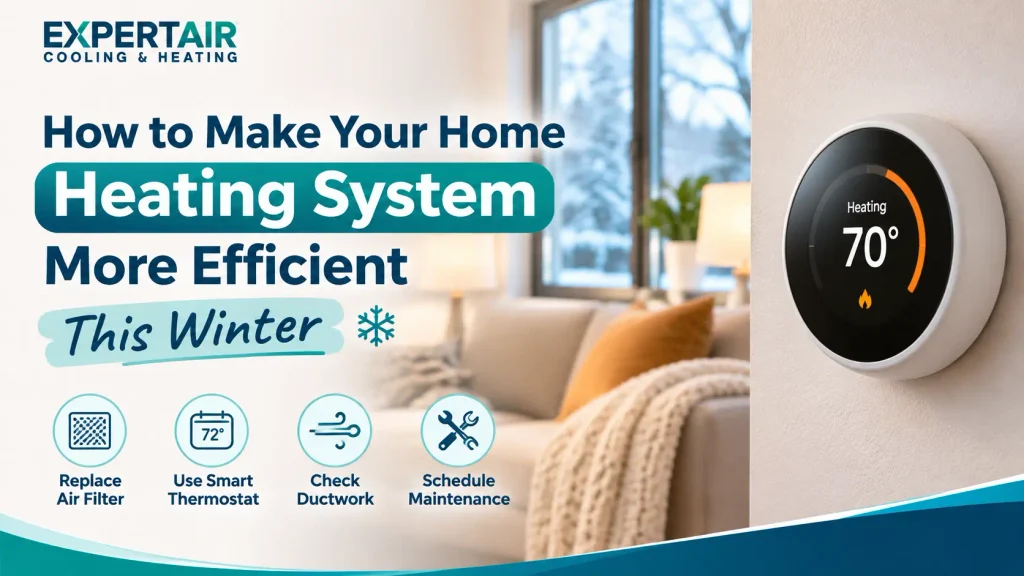
Efficient Heating Solutions help homeowners improve the performance of their existing heating systems, reduce unnecessary energy waste, and maintain comfortable indoor temperatures. Simple steps such as replacing dirty air filters, adjusting thermostat schedules, sealing air leaks, and maintaining HVAC equipment can make a meaningful difference.
You do not always need a new furnace or an expensive heating system to improve home comfort. Sometimes, the problem is how efficiently your current equipment distributes and uses heat.
Is your heating system running longer than usual? Are some rooms warm while others remain cold? Or have you noticed your energy bills increasing without a clear reason?
Before considering a complete system replacement, it is worth checking how your home uses and retains heat.
In this blog, we will explore practical ways to improve heating efficiency, reduce avoidable energy waste, and understand when professional HVAC maintenance may help.
What Are the Most Effective Efficient Heating Solutions for Your Home?
The most effective heating solutions focus on improving airflow, controlling heat loss, maintaining HVAC equipment, and using your thermostat correctly. Homeowners can often begin with simple maintenance and household adjustments before considering major upgrades.
Here are some practical steps that can help your heating system work more effectively.
1. How Does Replacing Your HVAC Air Filter Improve Efficient Heating Efficiency?
Replacing a dirty HVAC air filter helps maintain proper airflow and prevents your heating system from working harder than necessary. When dust and debris accumulate in the filter, air cannot move through the system as easily.
This can affect heating performance and increase unnecessary strain on equipment.
For better airflow:
- Check your air filter regularly, especially during periods of frequent heating use.
- Replace disposable filters according to the manufacturer’s instructions.
- Clean reusable filters as directed by the manufacturer.
- Make sure the replacement filter has the correct size and rating for your equipment.
ENERGY STAR recommends checking central HVAC filters monthly during heavy-use seasons and replacing them when dirty.
A clean filter is a simple starting point for improving heating system efficiency, but it cannot correct other issues such as damaged ductwork or malfunctioning equipment.
If your heater continues to struggle after replacing the filter, professional heating repair services can help identify the underlying problem.
2. Can Adjusting Your Thermostat Help Reduce Heating Energy Use?
Yes. A properly managed thermostat schedule can help reduce unnecessary heating when your home does not need the same temperature throughout the day.
For example, you may not need your usual daytime temperature while everyone is asleep or away from home.
Consider these practical thermostat habits:
- Choose a comfortable temperature rather than setting the thermostat unnecessarily high.
- Use programmable schedules if your daily routine is predictable.
- Avoid frequent manual adjustments that make the system constantly respond to changing settings.
- Understand your equipment before making large temperature setbacks.
One important consideration is the type of heating system you use. Heat pumps can respond differently to temperature setbacks than conventional furnaces, particularly when auxiliary heat is involved. Follow the manufacturer’s recommendations or ask an HVAC professional about suitable settings.
If you are considering better temperature control, explore the advantages of hybrid heating systems, which combine different heating technologies to manage home comfort.
3. How Can Sealing Air Leaks Keep Your Home Warmer?
Sealing air leaks helps prevent conditioned indoor air from escaping and outside air from entering your home. Even a properly functioning heating system may struggle to maintain comfortable temperatures if warm air escapes through gaps around doors, windows, and other openings.
Start by checking:
- Gaps around exterior doors and window frames.
- Weatherstripping that has become damaged or loose.
- Openings around pipes and utility connections.
- Gaps around attic access points.
Weatherstripping and suitable caulking can address some small leaks. However, larger air-sealing or insulation problems may require professional assessment.
Pay particular attention to your attic because inadequate insulation can allow heat to escape through the roof structure. The U.S. Department of Energy explains that air sealing and insulation work together to improve home energy performance.
4. Why Does Ductwork Maintenance Matter for Heating Performance?
Your ductwork carries heated air from your HVAC equipment to different rooms. If ducts have leaks, disconnected sections, damaged insulation, or airflow restrictions, some of that heated air may not reach the spaces where it is needed.
Common warning signs include:
- Certain rooms feel colder than others.
- Weak airflow from individual vents.
- Unusual dust around supply registers.
- Visible damage or disconnected duct sections.
- Heating performance that varies from room to room.
Keep supply and return vents clear of furniture, rugs, and other obstructions. Avoid closing multiple vents to force more air into other rooms, as this can affect system airflow and pressure.
A professional duct inspection can identify leaks, damaged connections, and insulation problems that may not be visible from inside your home.
Proper duct maintenance is one of the practical energy-efficient heating solutions worth considering before assuming the heating equipment itself needs replacement.
5. How Does Regular HVAC Maintenance Improve Heating Efficiency?
Regular HVAC maintenance helps identify developing problems, maintain proper equipment operation, and reduce the risk of unexpected breakdowns.
A professional heating maintenance visit may include:
- Inspecting electrical connections and system controls.
- Checking the thermostat and operating cycle.
- Inspecting relevant heating components.
- Checking gas connections and burner operation on applicable gas systems.
- Examining airflow and filter condition.
- Identifying visible wear or other performance concerns.
The exact maintenance procedure depends on the type of equipment installed in your home.
ENERGY STAR recommends annual pre-season HVAC check-ups, with heating equipment generally checked in the fall before the heating season begins.
If your system has not been inspected recently, review Expert Air’s heating maintenance services to understand how professional maintenance can support reliable operation.
6. When Should You Consider a Professional Heating System Inspection?
You should consider a professional inspection when your heating system runs continuously, produces unusual sounds, delivers uneven heat, or struggles to maintain the thermostat setting.
Some symptoms may indicate airflow problems, worn components, thermostat issues, or a system that needs repair.
Pay attention to these warning signs:
- Heating takes longer than it normally does.
- The system frequently starts and stops.
- Some rooms remain uncomfortable despite normal operation.
- Energy use increases without an obvious change in household habits.
- You notice unusual noises or repeated system interruptions.
Do not ignore a burning or gas-like smell. If you suspect a gas leak, leave the property and contact your gas utility or emergency services from a safe location. Do not operate electrical switches or appliances inside.
A technician can inspect the equipment and determine whether maintenance, repair, or further evaluation is appropriate. If you are experiencing heating problems, visit Expert Air’s heating repair page to learn about available service options.
7. What Other Home Improvements Can Support Efficient Heating?
Your HVAC equipment is only one part of your home’s overall energy performance. Insulation, windows, doors, and everyday household habits also influence how effectively your home retains heat.
Consider these additional improvements:
- Add or improve attic insulation when an assessment shows it is needed.
- Use curtains or blinds to manage heat loss through windows.
- Close exterior doors properly and repair damaged weatherstripping.
- Keep interior airflow paths clear.
- Investigate rooms that consistently feel colder than the rest of the house.
The U.S. Department of Energy recommends looking at the entire home rather than focusing only on the heating equipment.
Make Your Home Heating More Efficient with Expert Air Cooling & Heating
A comfortable home does not always require a completely new heating system. Improving airflow, maintaining your equipment, managing thermostat settings, and addressing heat loss can all contribute to better heating performance.
If your heating system is not performing as expected, Expert Air Cooling & Heating can help you understand the condition of your equipment and identify suitable service options.
Our team provides heating repair, maintenance, furnace services, and heating installation for homeowners in Baytown, The Woodlands, and surrounding Greater Houston communities.
Do not wait until a small heating issue becomes an unexpected breakdown. Contact Expert Air Cooling & Heating at (281) 428-7344 or schedule your heating service to discuss your home’s heating needs.
Frequently Asked Questions About Efficient Heating Solutions
1. What is the easiest way to improve heating efficiency at home?
Start by checking your HVAC air filter, keeping vents clear, using suitable thermostat settings, and checking for obvious air leaks. These simple steps can help address common sources of unnecessary energy use.
2. How often should I replace my furnace air filter?
Check your filter monthly during periods of heavy use. Replacement frequency depends on the filter type, household conditions, manufacturer instructions, and how frequently the heating system operates.
3. Does a smart thermostat help reduce heating costs?
A smart thermostat can help manage heating schedules and reduce unnecessary operation when properly configured. Actual savings depend on your existing thermostat, household routine, heating equipment, and energy usage.
4. Can leaking ducts make my heating system less efficient?
Yes. Leaking, disconnected, or poorly insulated ducts can allow heated air to escape before reaching the intended rooms. A professional duct inspection can help identify these problems.
5. When should I schedule heating system maintenance?
Schedule professional heating maintenance before the main heating season, ideally in the fall. You should also arrange an inspection if you notice unusual sounds, weak airflow, inconsistent heating, or repeated operating problems.