


The most efficient heating source for homes in Texas is often a modern air-source heat pump because it transfers heat instead of generating it, making it well suited to many of the state’s mild winter conditions. However, the best option depends on your home’s insulation, existing HVAC setup, energy prices, and heating requirements.
What if your heating system could keep your home comfortable without using more energy than necessary?
With cooler weather arriving in Texas, many homeowners start thinking about their heating equipment and whether it is still the right choice.
The answer is not always as simple as choosing the newest or most expensive system. Different homes have different heating needs, and the equipment that works well in one property may not be the best choice for another.
In this blog, we’ll compare common heating options, explain how they work, and look at what Texas homeowners should consider before choosing a system.
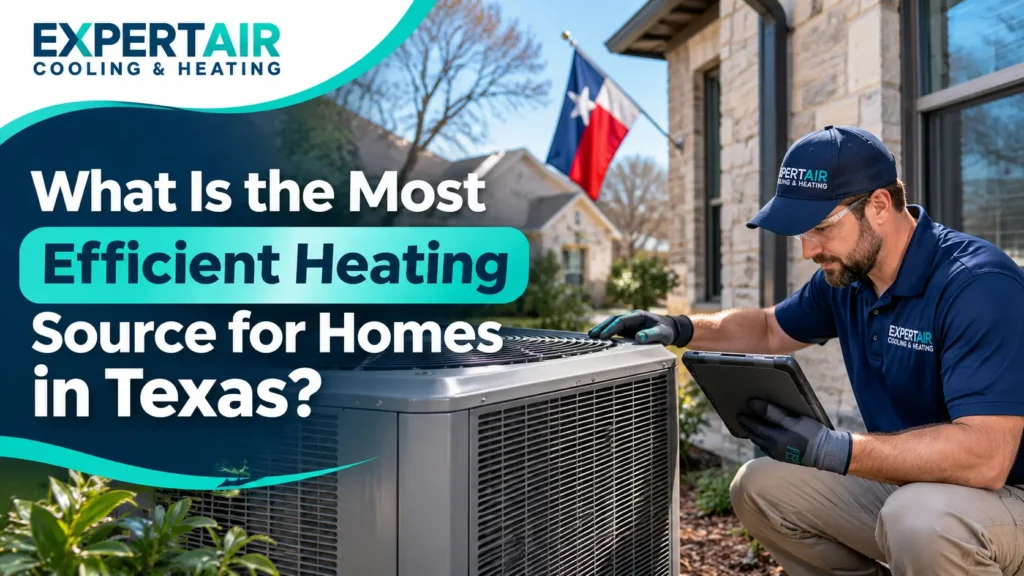
What Is the Most Efficient Heating Source for Homes in Texas?
A heat pump is often one of the most energy-efficient choices for homes in Texas because it moves heat from the outdoor air into the home rather than producing heat through fuel combustion or electric resistance.
Air-source heat pumps can provide both heating and cooling using the same equipment. This makes them a practical option for homeowners who need air conditioning for much of the year and heating during cooler months.
However, efficiency does not automatically mean the lowest overall cost. Installation expenses, electricity and gas rates, equipment condition, and home insulation all affect the final result.
You can explore the heat pump services offered by Expert Air Cooling & Heating to understand the available heating and cooling options.
What Are the Different Heating Systems Available for Texas Homes?
Texas homeowners can choose from several energy-efficient heating systems, depending on their property and existing HVAC equipment.
1. Air-Source Heat Pumps
An air-source heat pump transfers heat between the outdoor air and your home. During winter, it collects available heat from outside and moves it indoors. During summer, the process reverses to provide cooling.
Some advantages include:
- Provides heating and cooling in one system.
- Can use less electricity than traditional electric resistance heating.
- Suitable for many homes in moderate climates.
- Available in different capacities and configurations.
For homeowners considering an upgrade, professional heat pump installation and service can help determine whether this system suits their property.
2. High-Efficiency Gas Furnaces
A gas furnace heats air by burning natural gas and distributing the warmed air through ductwork. It can be a suitable option for homes that already have compatible gas connections and duct systems.
When comparing furnaces, check the AFUE rating, which indicates how much of the fuel energy is converted into usable heat over a heating season.
A higher AFUE rating generally means less fuel energy is lost during operation. If you are considering a furnace upgrade, explore furnace services from Expert Air.
3. Hybrid Heating Systems
A hybrid heating system combines an electric heat pump with a gas furnace. The heat pump can handle heating during milder conditions, while the furnace can provide additional heat when outdoor temperatures or operating conditions make it more suitable.
This arrangement gives homeowners two heating options within one system.
Expert Air Cooling & Heating provides hybrid heating system services in The Woodlands and the surrounding Houston area.
4. Ductless Mini-Split Heat Pumps
A ductless mini-split uses an outdoor unit connected to one or more indoor units. It can provide heating and cooling without relying on traditional ductwork.
This can be useful for:
- Homes without existing ductwork.
- Room additions and converted spaces.
- Areas that need individual temperature control.
- Homes where extending ducts may be difficult.
The right system depends on room size, layout, insulation, and heating requirements.
How Do Heat Pumps and Gas Furnaces Compare?
Heat pumps and gas furnaces both provide home heating, but they operate differently. A heat pump transfers heat, while a furnace generates heat by burning fuel.
| Comparison | Heat Pump | Gas Furnace |
| Energy source | Electricity | Natural gas |
| Heating method | Transfers outdoor heat indoors | Burns gas to produce heat |
| Cooling capability | Yes, with suitable equipment | Requires separate AC equipment |
| Best fit | Many moderate-climate homes | Homes with suitable gas connections |
| Efficiency measurement | HSPF2 and COP | AFUE |
The better choice depends on local utility rates, installation costs, equipment performance, and your home’s heating needs.
According to the U.S. Department of Energy’s heat pump guide, heat pumps can provide an energy-efficient alternative to conventional heating equipment, particularly in moderate climates.
What Factors Affect Heating System Efficiency?
Even a high-efficiency system may not perform as expected if the home or installation is not suitable. Several factors influence home heating efficiency.
- Insulation: Poor insulation allows heated air to escape, making the system work harder.
- Air leaks: Gaps around windows, doors, and other openings can affect indoor comfort.
- Duct condition: Leaking or poorly insulated ducts can reduce the amount of heated air reaching rooms.
- Equipment sizing: An incorrectly sized system may struggle to maintain comfortable temperatures or cycle inefficiently.
- Maintenance: Dirty filters and neglected components can affect airflow and system operation.
- Thermostat settings: Appropriate temperature settings help manage heating demand.
How Can Texas Homeowners Improve Heating Efficiency During Winter?
You can improve heating efficiency by maintaining your equipment, reducing unnecessary heat loss, and using your thermostat appropriately.
Here are some practical steps:
- Replace or clean air filters according to the manufacturer’s recommendations.
- Keep supply and return vents clear.
- Check doors and windows for noticeable air leaks.
- Use suitable thermostat settings rather than frequently making large adjustments.
- Arrange professional maintenance before the heating season.
- Address unusual noises, inconsistent heating, or repeated system shutdowns.
Regular heating maintenance can help identify issues affecting your system’s operation before they become more disruptive.
When Should You Consider Replacing Your Existing Heating System?
Consider a professional assessment if your heating system requires frequent repairs, struggles to maintain indoor temperatures, or no longer meets your household’s needs.
Other reasons to explore replacement include:
- Your equipment is aging and needs repeated repairs.
- Some rooms remain uncomfortable despite normal operation.
- Your current system does not suit your home’s heating requirements.
- You are planning a major HVAC upgrade.
Before replacing equipment, compare repair costs, expected operating expenses, installation requirements, and available system options. A professional can help you decide whether repair or replacement makes more sense.
If you are exploring an upgrade, visit Expert Air’s heating installation page for more information.
Frequently Asked Questions
1. What is the most energy-efficient way to heat a home in Texas?
A modern air-source heat pump is often an energy-efficient option in Texas because it transfers heat rather than generating it. However, the right system depends on the home’s layout, energy costs, and existing equipment.
2. Are heat pumps better than gas furnaces in Texas?
Not in every situation. Heat pumps can be highly efficient in moderate weather, while gas furnaces may suit homes with existing gas infrastructure or particular heating requirements. Compare operating costs and installation needs before deciding.
3. Do heat pumps work during cold weather in Texas?
Yes. Heat pumps can continue providing heat during cold weather, although their capacity and efficiency vary with outdoor temperatures and equipment design.
4. What does AFUE mean on a furnace?
AFUE stands for Annual Fuel Utilization Efficiency. It measures the percentage of fuel energy a furnace converts into usable heat over a heating season.
5. How often should a home heating system be serviced?
Follow the equipment manufacturer’s maintenance recommendations. A professional seasonal inspection can help check system operation, airflow, and important components before regular winter use.
Choose the Right Heating System for Your Texas Home
Choosing the most efficient heating source for homes in Texas requires more than comparing equipment ratings. Your home’s size, insulation, existing HVAC setup, and energy costs all matter when selecting a suitable system.
Expert Air Cooling & Heating provides heating services in Baytown, The Woodlands, and surrounding Greater Houston communities, including heat pump, furnace, and hybrid heating services.
Need help comparing heating options for your home? Visit our heating services page or contact Expert Air Cooling & Heating to discuss your heating requirements.